1.0
Siting & land use
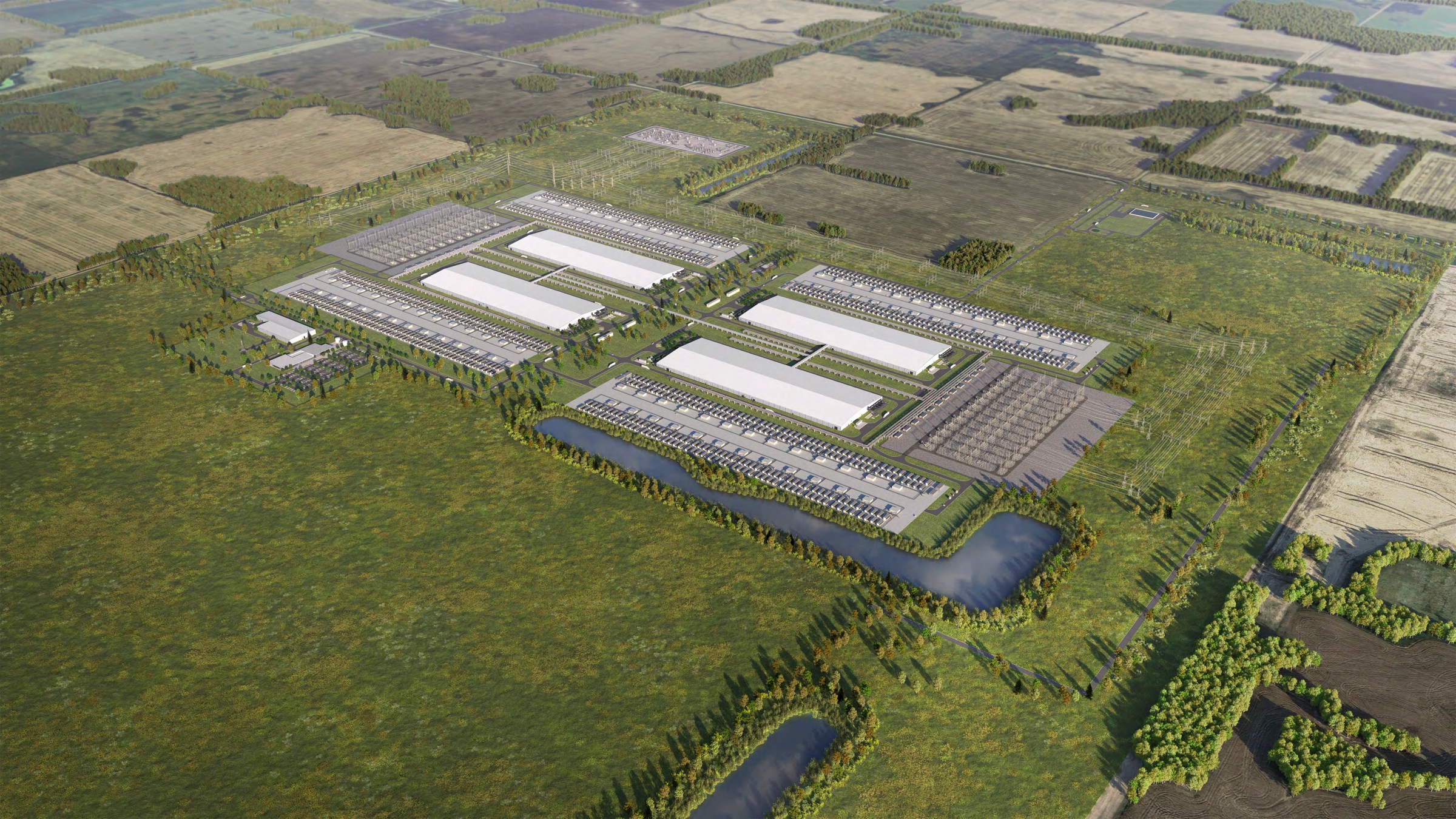
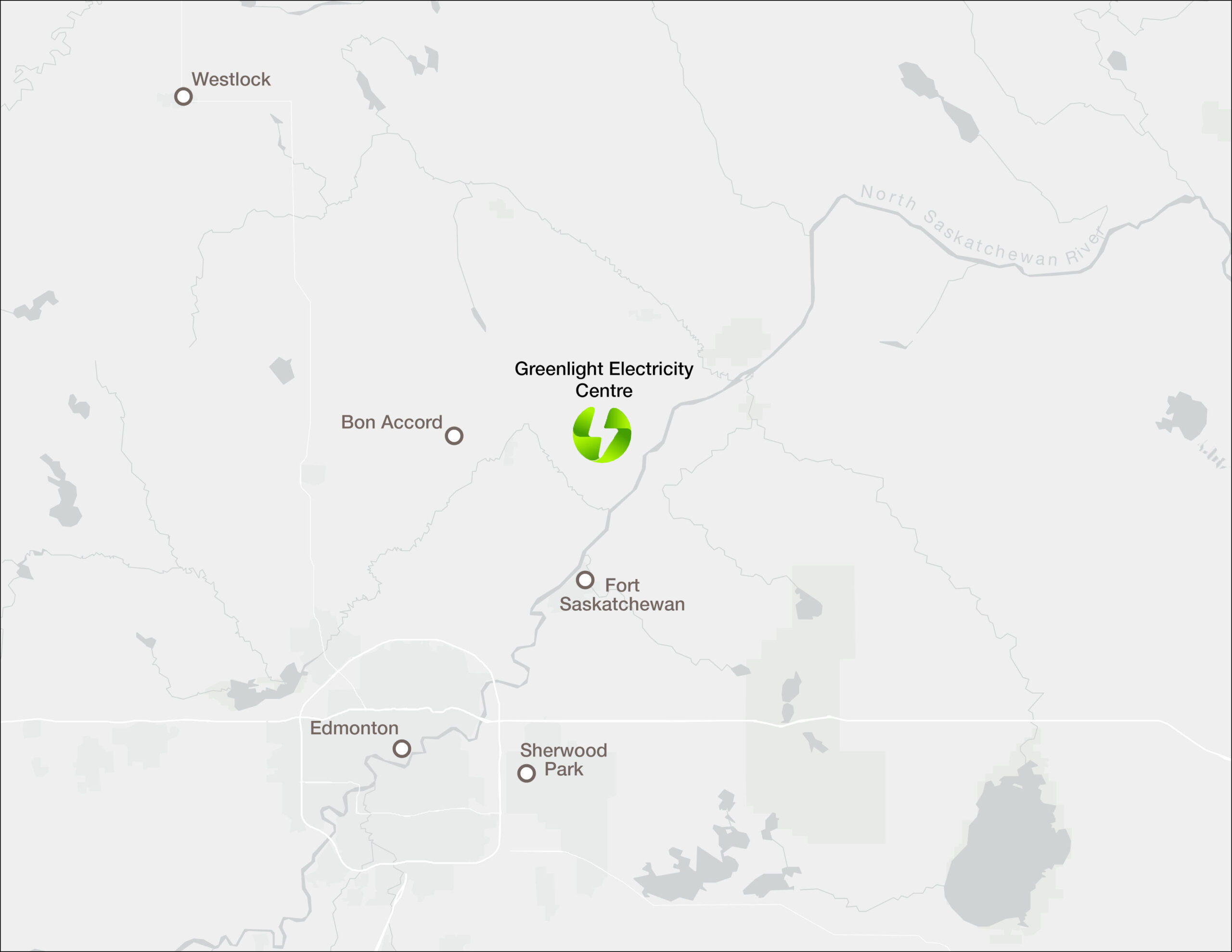
The campus is in Alberta's Industrial Heartland, an established heavy-industrial area rather than a residential neighbourhood.
Start with the answer
This is our public-record assessment, not a regulatory ruling. A point can move as permits, contracts, designs and operating data become public.
The campus is in Alberta's Industrial Heartland, an established heavy-industrial area rather than a residential neighbourhood.
Meta says the data centre will use closed-loop liquid cooling with dry heat rejection and no operational cooling-water use.
The supply chain is unusually visible: AESO connection allocation, Capital Power interim supply and dedicated Greenlight generation are all publicly identified.
Meta says it will pay the full costs of its energy use and fund new and upgraded infrastructure, plus about CA$60 million of local road and water work.
Scale, investment, cooling design, partners, jobs and reporting commitments are public. That is materially better than many proposals.
The server cooling story is good. The power plant still needs a complete, current water balance, source, drought plan and zero-potable-industrial commitment.
Noise can be engineered down. We want the model, tonal and low-frequency analysis, post-startup measurements and a fix-it obligation at the nearest receptors.
Greenlight is gas-fired. Alberta's project listing refers to CCS, while current Greenlight public material does not yet give a binding installed-capture specification.
Investment, construction jobs, permanent jobs and local infrastructure are real benefits. Long-term tax, procurement, compute access and broader Alberta value should be measured, not assumed.
Greenlight now has binding AUC reclamation-security conditions for the dedicated power plant, backed by a third-party estimate of about CA$30.54 million in 2025 dollars. Security starts in year five and reaches the full updated reclamation amount by year 20. We have not found equivalent secured reclamation funding for Meta's data-centre campus.
The project in one minute
Meta says it will also invest about CA$60 million in local roads and water infrastructure and will report the site's water withdrawals and energy use annually once operational.
Power scale
West Edmonton Mall gives Edmonton a useful reference point. Natural Resources Canada reported post-retrofit WEM electricity use of 462,437 GJ per year, about 14.7 MW average. A continuously loaded 1 GW campus is about 68 times that average load.
The WEM number is a historical annual-average electricity figure. The Greenlight and Meta numbers are project capacity/load figures, so this is a scale comparison, not a claim that all facilities run at nameplate output every hour.
Power plan
The AESO allocated 970 MW of its 1,200 MW interim large-load limit to the GLDC load project.
A greater-than-10-year agreement provides 250 MW of capacity and energy in support of Meta's Sturgeon County load.
Pembina, MSIP and Kineticor reached FID on a dedicated 932 MW gas-fired combined-cycle plant.
The AUC approval covers up to 1,864 MW in two stages on a 98-hectare site.
The companies and regulators have identified a credible chain from grid connection to contracted supply to dedicated generation. Meta also says it will pay the full costs of its energy use and new/upgraded infrastructure.
Who pays every attributable grid cost, how the load ramps before Greenlight is online, what happens during outages and maintenance, and whether clean-energy matching is described separately from the physical generation source.
Water stewardship
Closed-loop liquid cooling with dry coolers.
Meta says no operational cooling-water use.Servers turn electrical energy into heat.
The power has its own water footprint.Combined-cycle gas plant with air-cooled condensers.
The June 2026 AUC decision gives a current project estimate of 538,000 m³/year.“No potable water for data-centre cooling, power generation, process water or other industrial uses. If the project cannot operate on dry cooling, reclaimed wastewater or another non-potable source, don't build it there.”
The AUC decision describes Greenlight's source as municipal water supplied by Sturgeon County through a new pipeline. It does not establish that the supply will be entirely non-potable industrial process water. For a 10/10 score, the actual source and treatment should be explicit, industrial use should be non-potable, and a multi-year drought case should be published.
If reclaimed water is required, the project should fund enough wastewater-treatment or restoration capacity that the useful water returned exceeds the whole campus's consumptive use.
Noise stewardship
Fans, pumps, transformers, generators and heat-rejection equipment can be loud at the source. The engineering question is what reaches the nearest receptor after distance, building orientation, barriers, enclosures, fan selection and operating controls do their job.
AUC Rule 012 requires noise impact assessment for regulated facilities and sets the framework for permissible sound levels and complaints. Our standard goes one step further: publish the receptor model and then publish the measurements after startup.
“A properly designed data centre should be acoustically unobtrusive outside its property. If neighbours can clearly hear it, that is an engineering, siting or mitigation problem, not an unavoidable characteristic of data centres.”
“Noise is a real impact, so design it out, measure it at the receptor, monitor it after construction, and make the project pay to fix it if it gets it wrong.”
Dedicated generation
The current FID is for a 932 MW gas-fired combined-cycle plant. The AUC approval allows up to 1,864 MW. Greenlight will capture gas-turbine exhaust heat to make steam and produce additional electricity.
The environmental accounting cannot stop at the data-centre fence. Fuel, CO₂, water, noise and eventual decommissioning at the dedicated power plant belong in the same stewardship picture.
Alberta's Major Projects listing says Greenlight will integrate carbon capture and sequestration. Greenlight's current public project page and July 2026 FID release describe combined-cycle generation but do not provide an installed capture rate, commissioning date, transport/storage route or tonnes captured. That is why this remains a half point.
Proper stewardship
Dedicated Greenlight plant and its fuel/operating costs.
Substations, connection studies and attributable upgrades.
Non-potable supply, treatment, reuse and drought resilience.
Barriers, enclosures, equipment changes and monitoring.
Incremental infrastructure created by construction and operation.
Not a promise from whoever happens to own the asset decades later.
End of life
Greenlight now has something important that was missing from our earlier review: binding AUC reclamation-security conditions for the power plant. The record includes a third-party Class 5 demolition and reclamation estimate of approximately CA$30.54 million in 2025 dollars.
Beginning on the fifth anniversary of commercial operation, Greenlight must provide security through irrevocable standby letters of credit, with updated confirmations every five years. The full updated reclamation amount must be secured by year 20 and maintained until a reclamation certificate is issued.
A 10/10 project should still secure the entire campus liability early enough that cleanup never depends on the financial health of whoever owns the assets decades from now.
Living accountability
This section should get more useful after the campus opens. The promise column stays. The actual column gets filled with measured annual results.
| Measure | Promised / current public position | What we want published | Actual |
|---|---|---|---|
| Data-centre power | 1 GW announced scale | Annual MWh, peak MW, load factor | After opening |
| Potable industrial water | No 10/10 commitment found | Litres: target should be zero | After opening |
| Data-centre cooling water | No operational cooling-water use claimed | Annual cooling-loop makeup and maintenance losses | After opening |
| Greenlight source water | 538,000 m³/year current AUC project estimate (~538M L/year; ~1.47M L/day annual average) | Withdrawal, consumption, potable/non-potable source, reuse, discharge and stage-specific use | After opening |
| CO₂ | Gas-fired combined-cycle generation | Gross emitted, captured, residual, capture rate | After opening |
| Noise | Must meet applicable requirements | Measured dBA plus tonal/low-frequency results at receptors | After opening |
| Infrastructure | ~CA$60M local roads/water plus energy infrastructure funded by Meta | Actual project-funded capital and any public contribution | During build |
| Jobs | ~3,000 construction; 300+ operational | Peak construction, ongoing FTE, Alberta/local share | During/after build |
| Taxes / public revenue | Economic benefit claimed | Property tax, corporate tax where reportable, local fees | After opening |
| Cleanup security | Greenlight power plant: binding AUC letter-of-credit conditions; full updated amount required by year 20. Equivalent Meta campus security not found. | Instrument, amount, beneficiary and update schedule for the entire data-centre campus as well as Greenlight | Before operation / as required |
This page deliberately separates company claims, regulator approvals and our stewardship requirements. A corporate promise is evidence of a promise, not proof of future performance.
Scoring note: The 7.5/10 stewardship score is DataCentreDebate.ca's assessment of the current public record. It is not an official government or regulatory score. The score can improve or decline as binding commitments and measured results change.